Comms that scored: how charities are using the World Cup to say something that matters
The 2026 World Cup runs until 19 July - and while some charities have already made brilliant use of the tournament, there's still time to take note of what's working and think about how it applies to your own comms.
Every major sporting event brings a wave of branded content. Most of it is forgettable. A few organisations jump on the moment with a post that feels forced, a stat that doesn't land, or a football metaphor that stretches so thin it snaps.
But some charities are using the World Cup to do something genuinely impressive - finding a real, meaningful connection between the biggest cultural moment of the summer and the issues they exist to address.
These aren't examples of bandwagon-jumping. They're examples of knowing your mission, understanding your audience, and having the courage to say something that matters when the world is paying attention.
Here's what the best comms have in common - and what you can actually take from it for your own comms.
1. Find your genuine connection to the moment
This is the most important one. Before you post anything, ask yourself: why does this moment matter to us specifically? If you can't answer that in one sentence, it's probably not yours to own.
The charities that have done this well haven't had to stretch to make it work - the connection is right there.
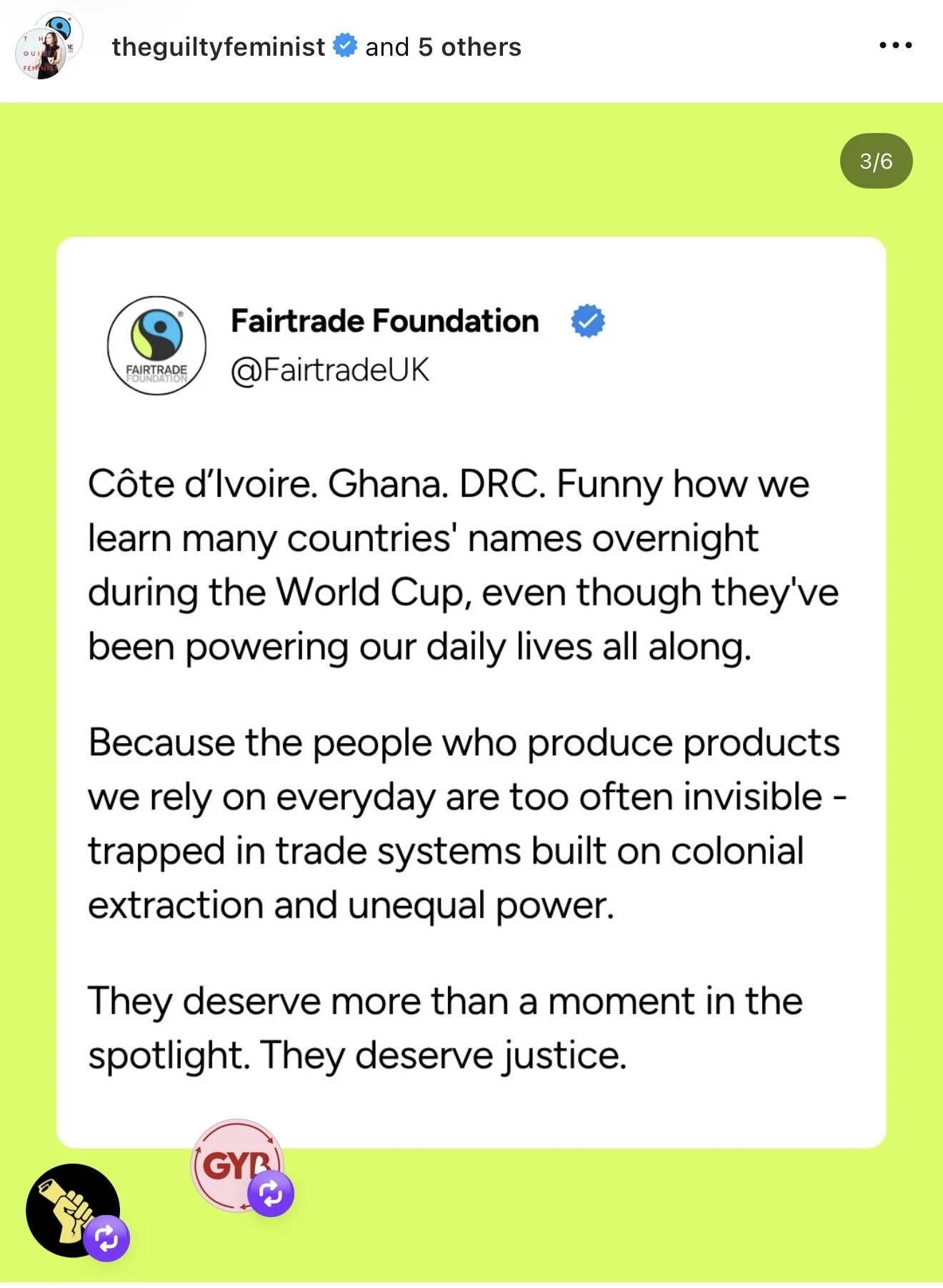
Fairtrade
Fairtrade used Harry Kane's "these nations" comment about Ghana to open up a conversation about colonial trade relationships and the invisible labour behind our everyday essentials. Ghana and Ivory Coast produce around 70% of the world's cocoa. Brazil, Colombia and Ethiopia supply a significant proportion of its coffee. Fairtrade were uniquely placed to say that - and they did.
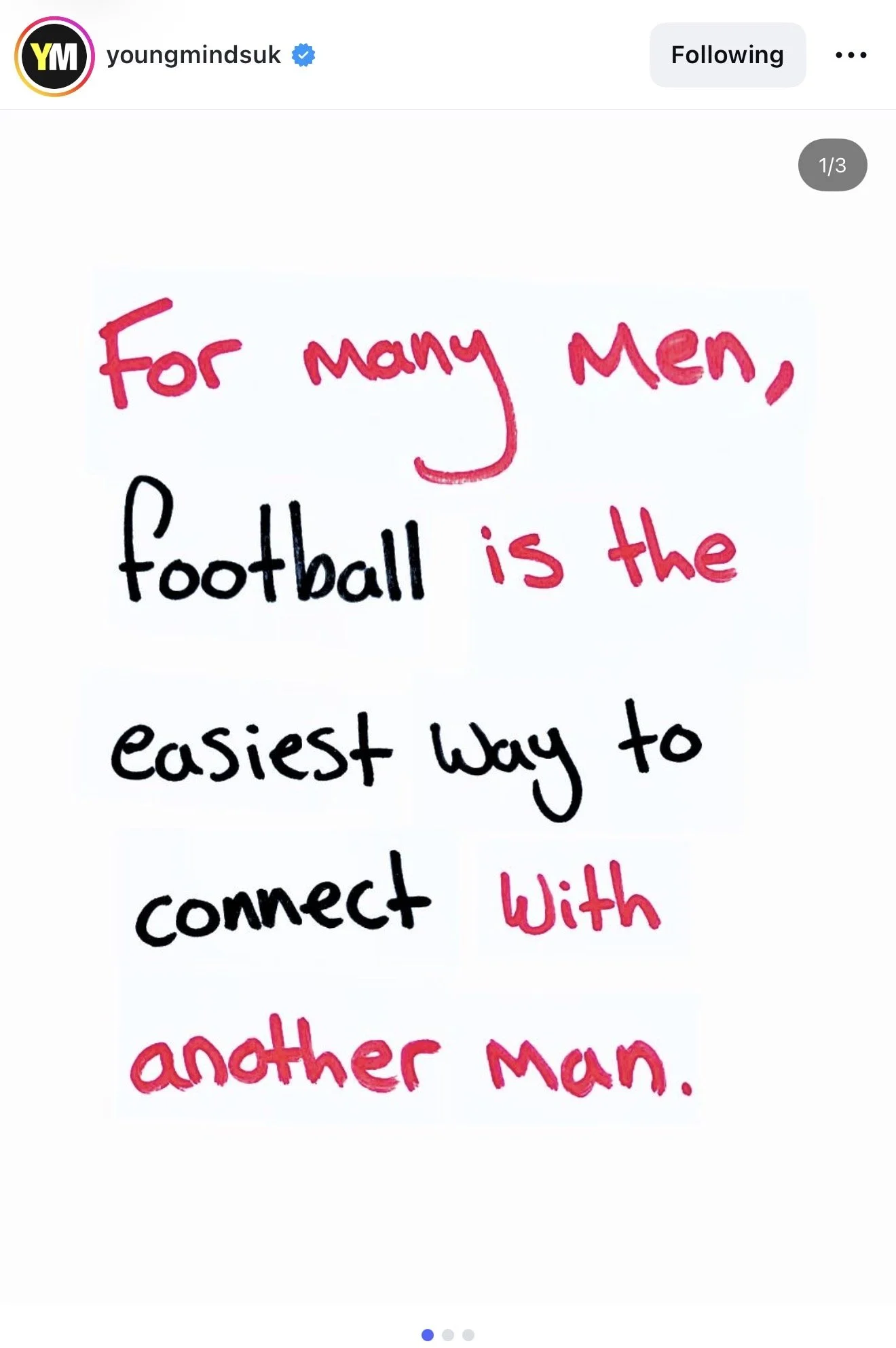
Young Minds
Young Minds shared a message from 21-year-old Alfie about football as a vehicle for male connection and emotional openness. "For many men, football is the easiest way to connect with another man." It worked because it was true, and because it came from a real young person's voice rather than an organisational statement.
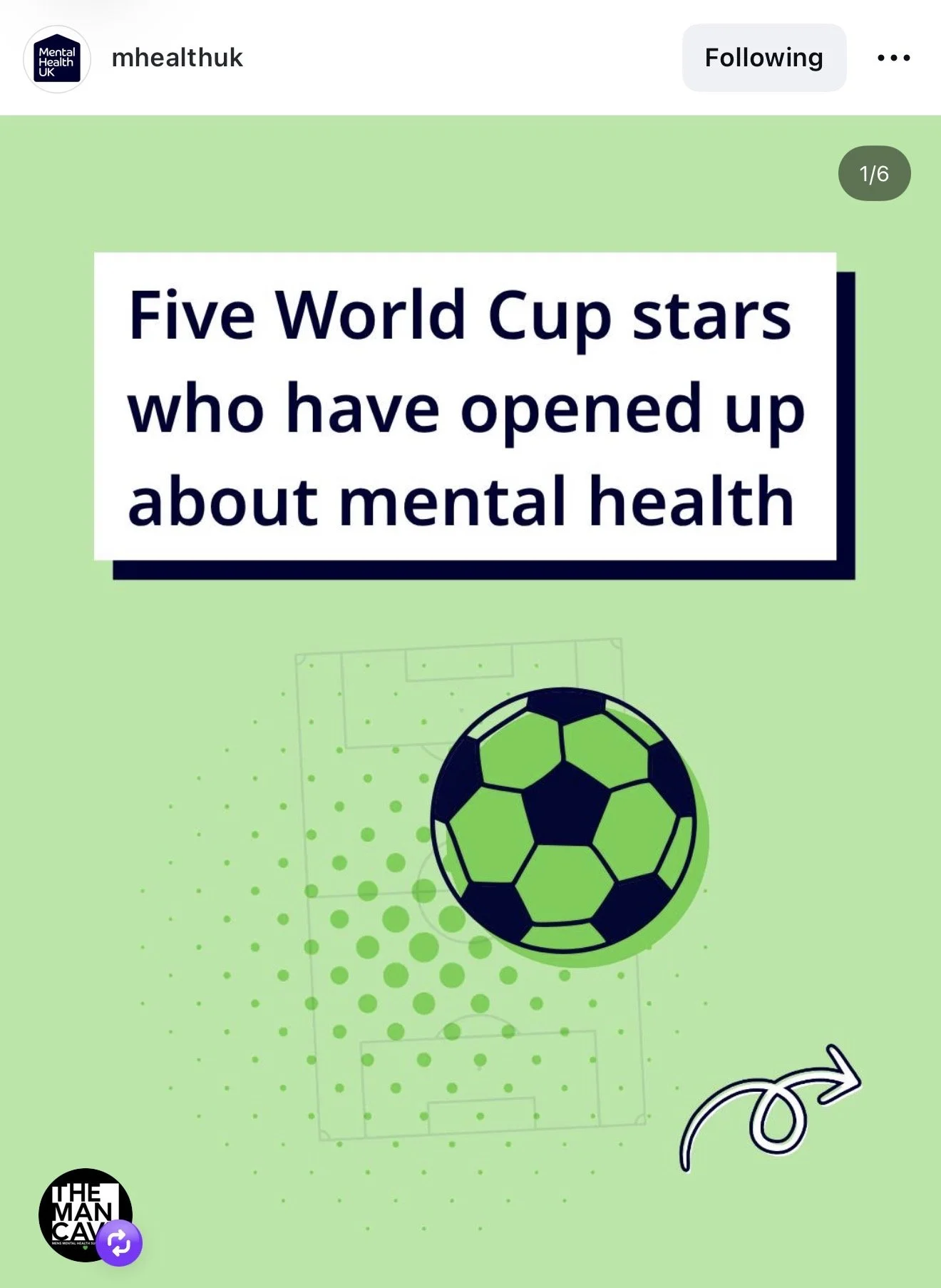
Mental Health UK
Mental Health UK used the tournament's opening day to spotlight five players who have spoken publicly about their mental health. "Scoring goals? Maybe. Breaking stigma? Definitely." Simple, timely, and directly connected to their mission.
Try this: Before jumping on any cultural moment, ask your team: what's our genuine one-sentence connection to this? If you've got one, you probably have something worth saying. If you haven't, it's okay to sit it out.
2. Reframe your issue using the language of football
Once you've found your connection, think about how you can translate it into the language your audience is already using. This is where some really clever comms has happened this tournament.
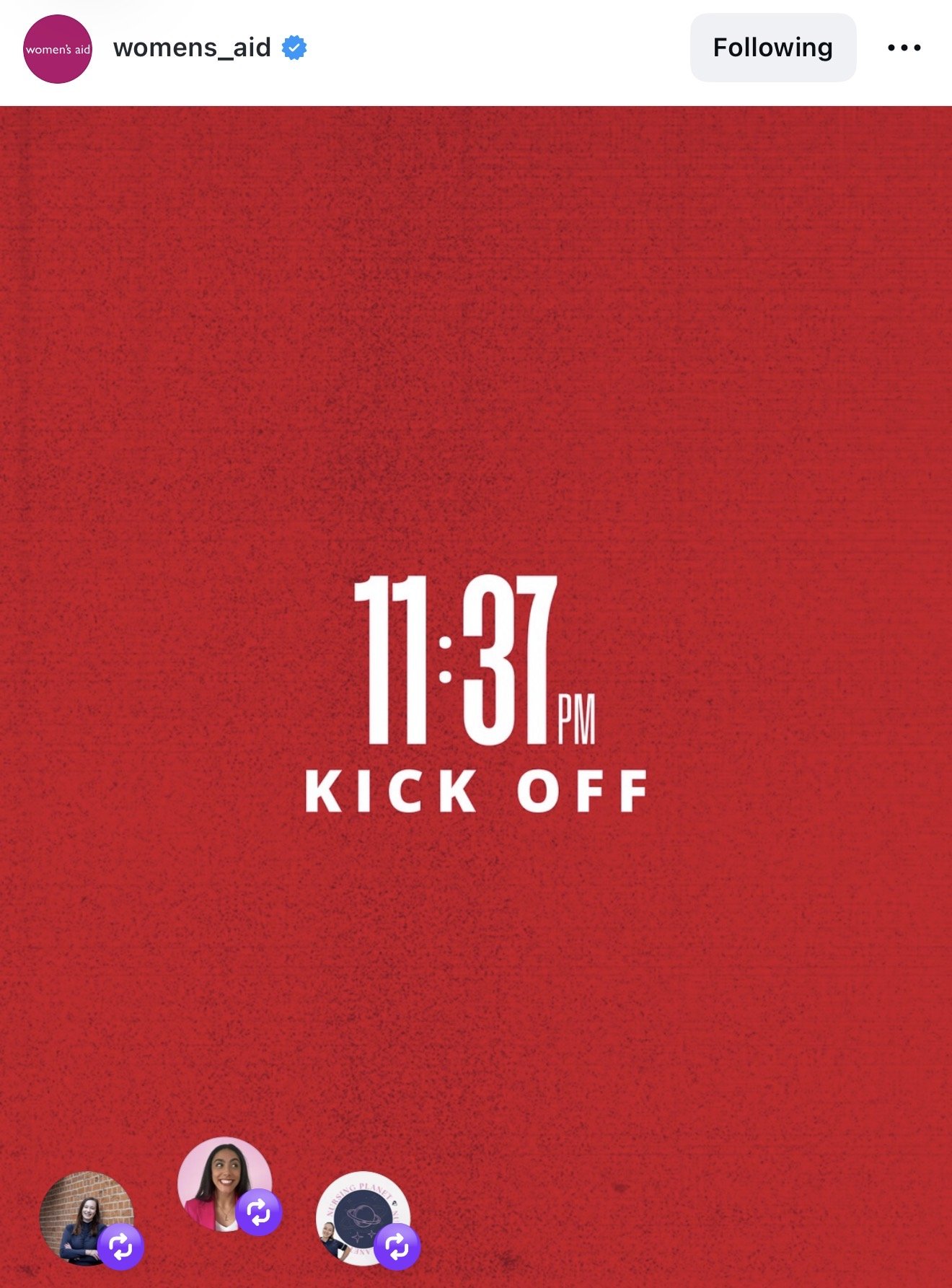
Women’s Aid
Women's Aid launched The Other Kick Off - built around a single detail: 11:37pm. Not kick off. The time after the final whistle, when abusive partners may be returning home. They used scoreline graphics and match statistics to show that domestic abuse increases by 38% when England lose, and 26% when they win or draw. They didn't explain the connection, they made you feel it.
Trussell
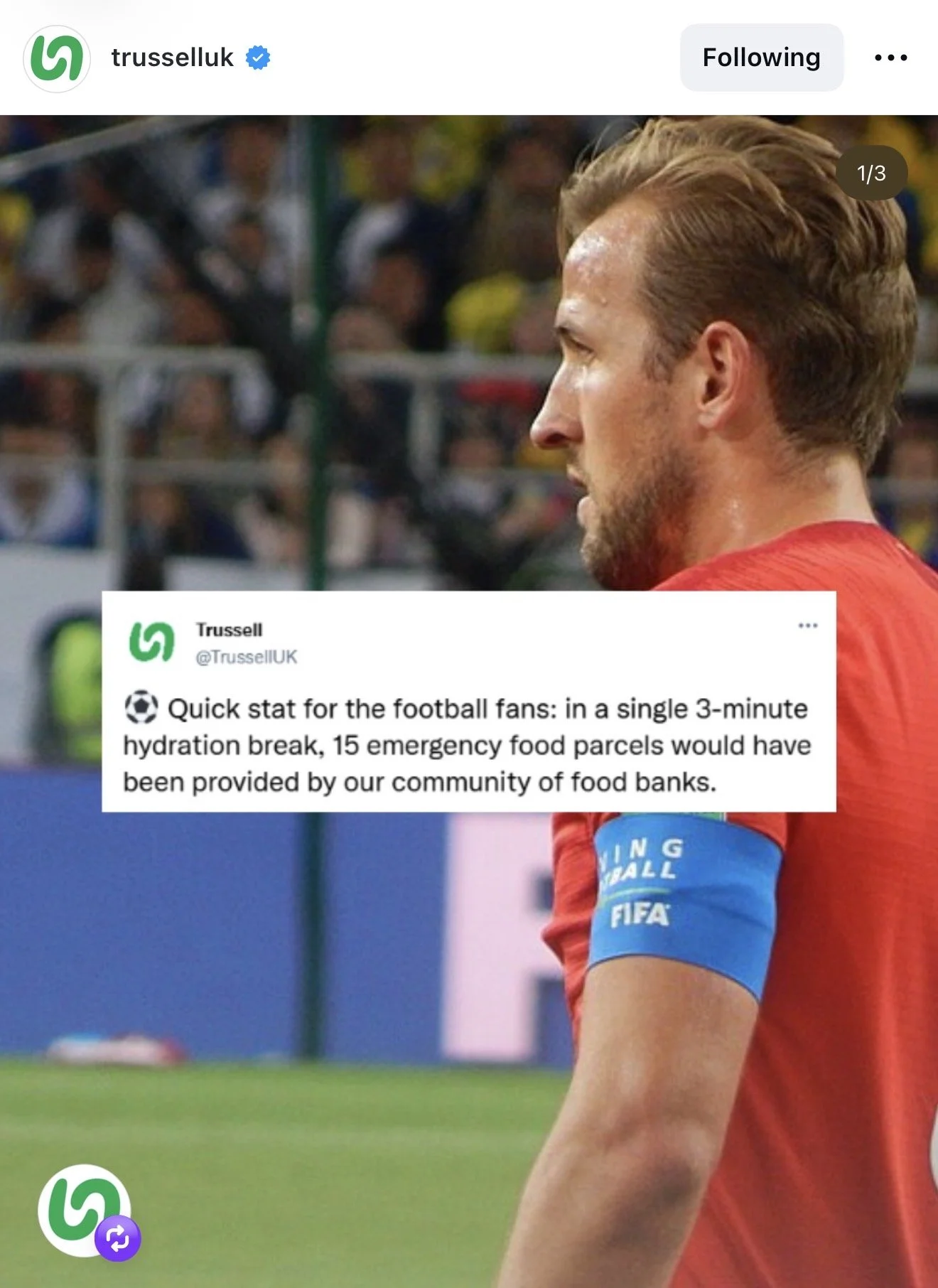
Trussell posted one stat formatted like match commentary: "In a single 3-minute hydration break, 15 emergency food parcels would have been provided by our community of food banks." A unit of time football fans understand, used to make food poverty feel immediate.
Hestia
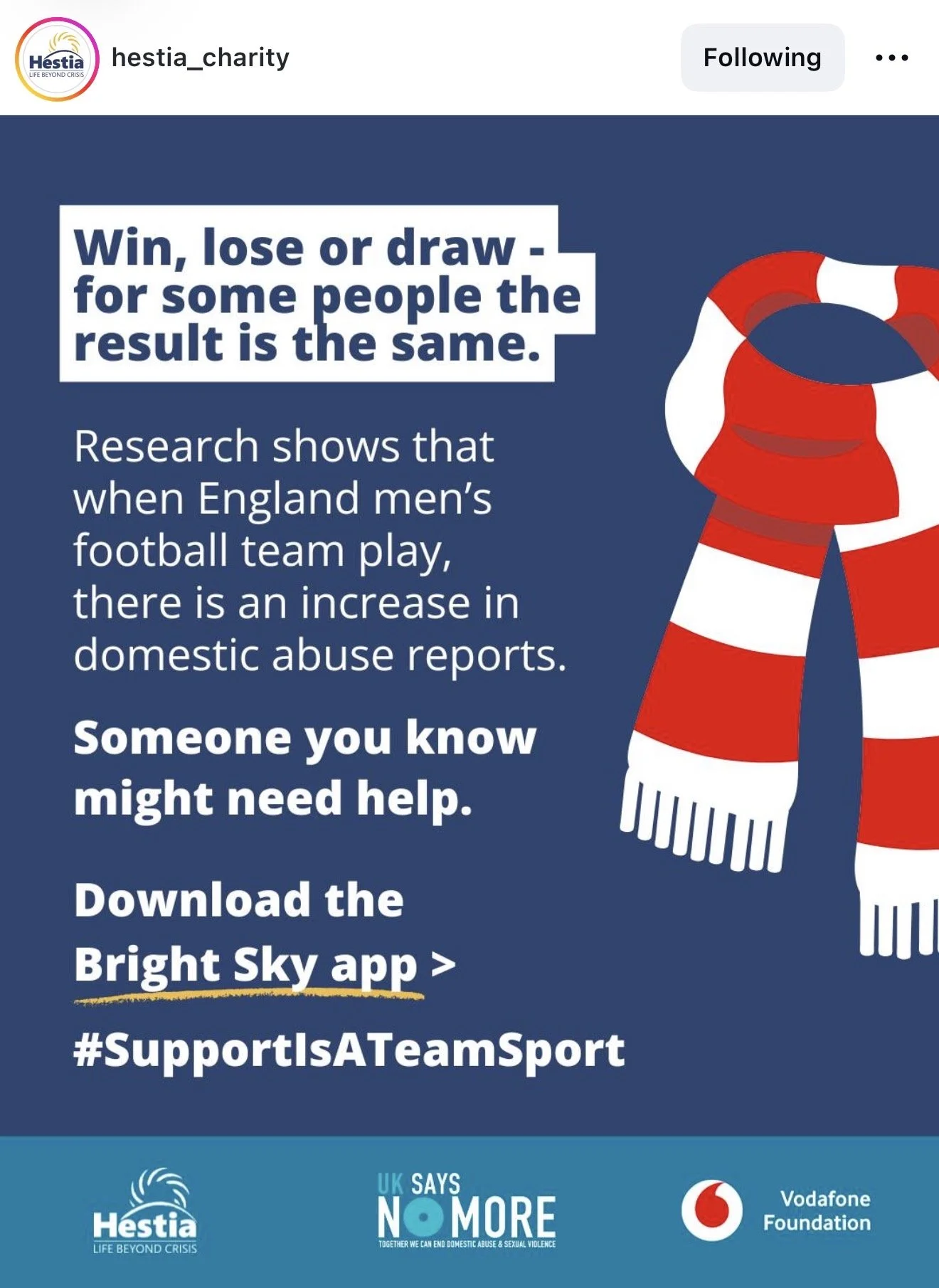
Hestia kept it even simpler: "Win, lose or draw - for some people the result is the same." One line. A football scarf. A link to their Bright Sky app.
Try this: What unit of measurement, phrase, or format does your audience already understand from football? Can you translate your impact or issue into that language?
3. Show, don't tell
Some of the strongest content this tournament has barely needed any copy at all. The visual idea does the work.
Greenpeace UK
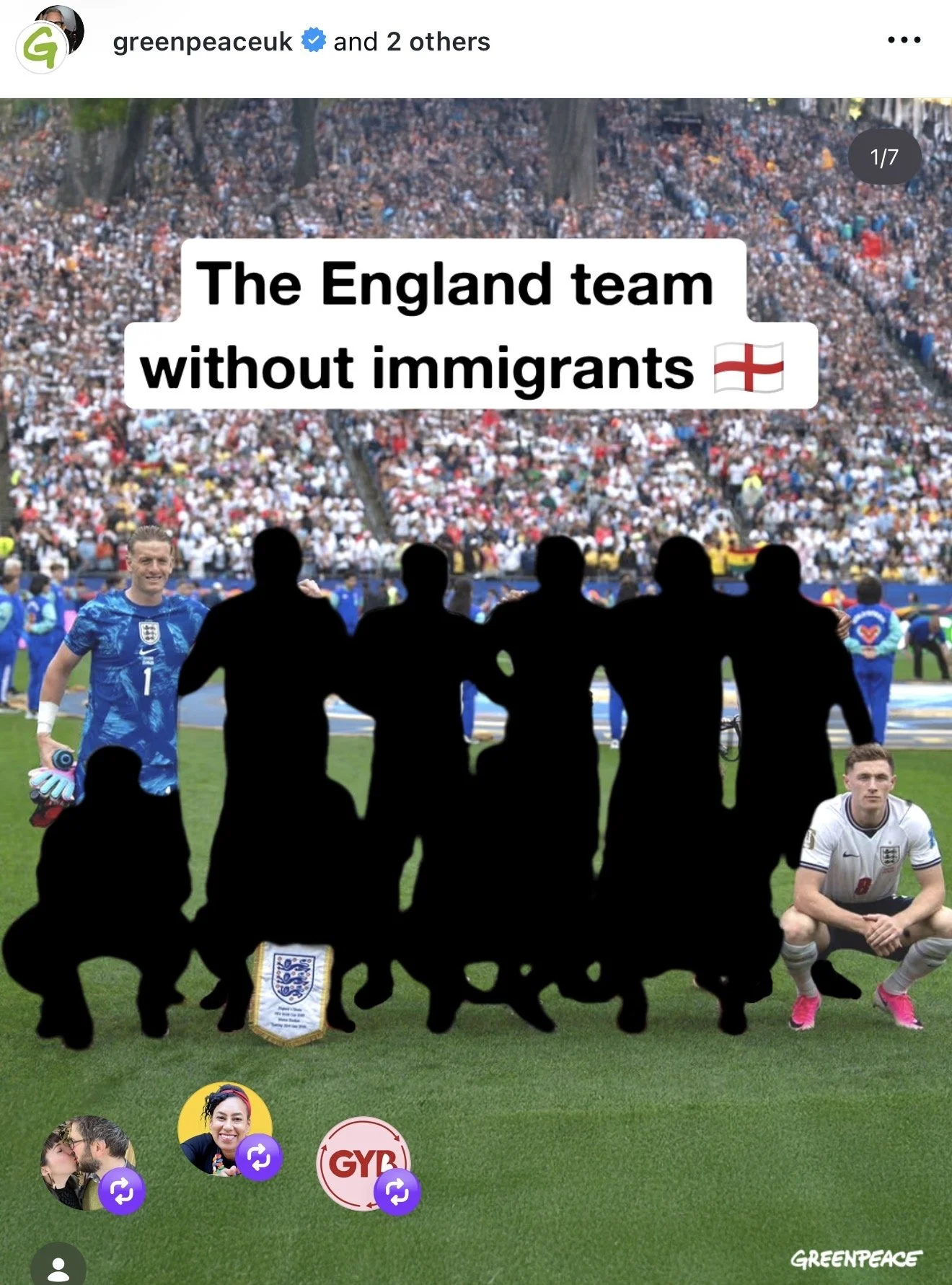
Greenpeace UK used the World Cup to challenge the harmful rhetoric around immigration; silhouetting the majority of the England squad - leaving only the players without immigrant heritage visible. .
Refuge
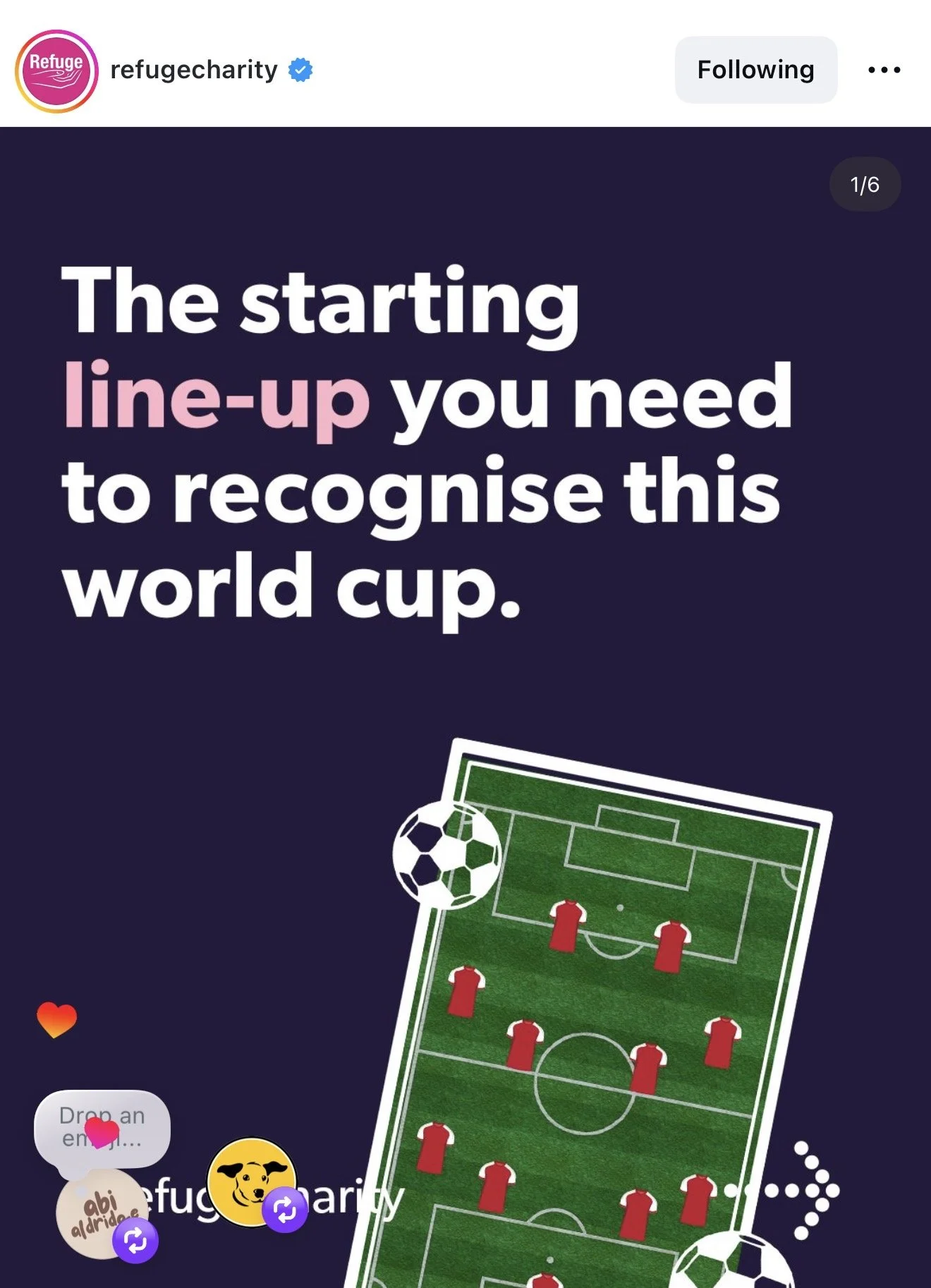
Refuge used football player cards - the kind familiar to anyone who's played FIFA - to list types of abuse as player stats. Coercive control: monitoring 99, isolation 99, gaslighting 99. It could have felt gimmicky. It didn't, because the content was so stark.
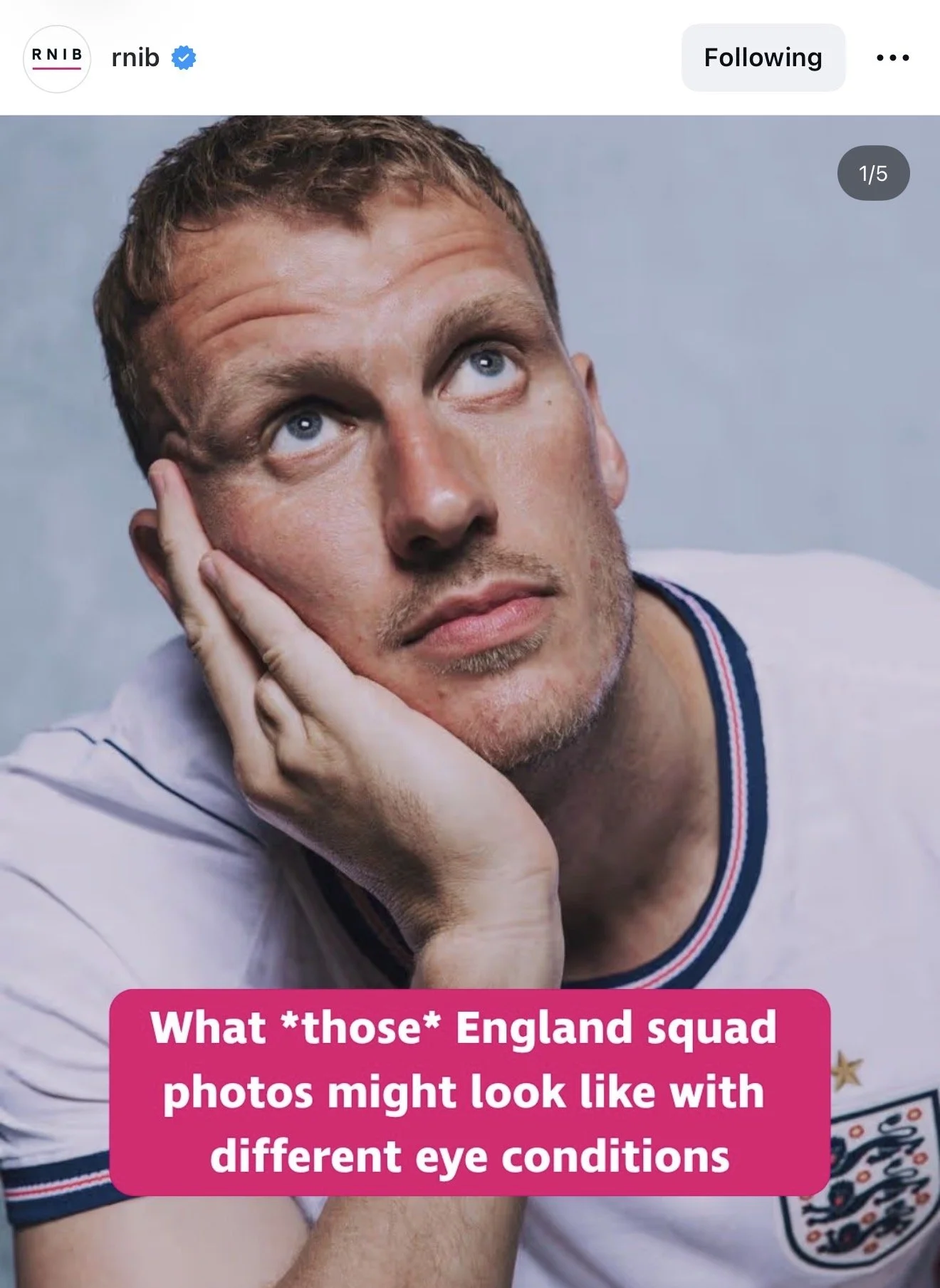
RNIB
RNIB took the viral England squad portraits and recreated them to show what they'd look like with different eye conditions. The alt text was exceptional - warm, funny, and informative. The whole post managed to be both accessible and accessibility-focused, which is rare.
Try this: Is there a visual format your audience is already engaging with this tournament that you could use to make your point? Sometimes the strongest comms lets the image do the talking.
4. Say the thing people are dancing around
Sometimes the most powerful comms isn't the cleverest or the most visually striking. It's just the most direct.
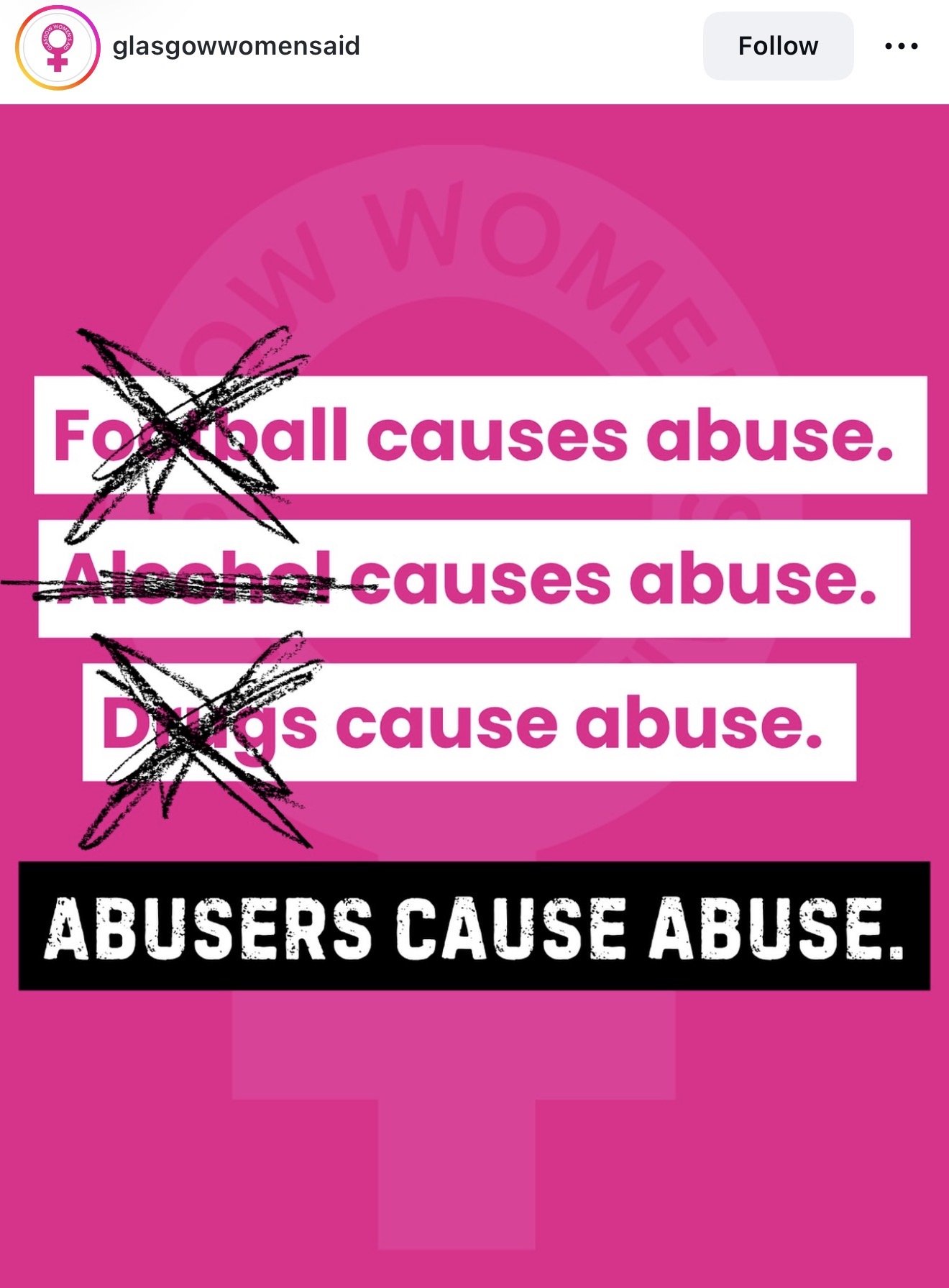
Glasgow Women’s Aid
Glasgow Women's Aid posted three lines crossed out - "Football causes abuse. Alcohol causes abuse. Drugs cause abuse." - followed by one line in bold: "ABUSERS CAUSE ABUSE." It's a direct counter-narrative to the way domestic abuse gets discussed around football tournaments. No softening. No nuance. Just the thing that needed saying, said clearly.
Try this: Is there something your charity knows to be true that tends to get lost in more careful, measured messaging? Sometimes the moment is right to just say it.
One more thing
The charities that have shown up well this tournament aren't necessarily the ones with the biggest budgets or the largest teams. They're the ones who knew what they wanted to say, found a genuine reason to say it now, and trusted their audience enough to say it clearly.
The final is on 19 July. There's still time!
